Sustainable Developer Merch: What Radical Transparency Actually Means
Most "eco" developer merch hides the data. ByteWear shows it all — Digital Product Passports, material certs, factory locations. Here's what sustainable coding clothing actually looks like.
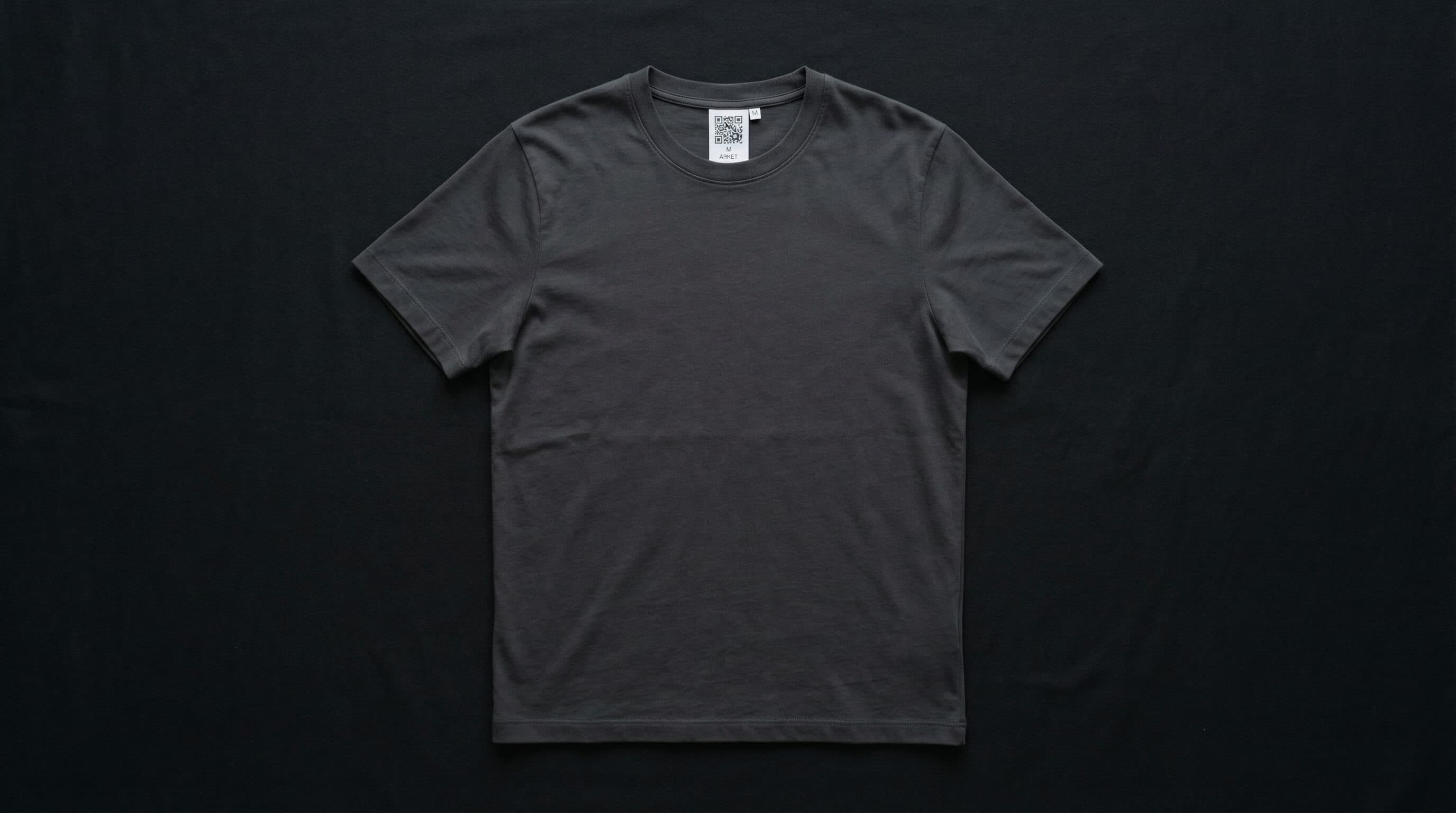
Every sustainable fashion brand says the same things.
"Eco-friendly." "Responsibly made." "We care about the planet." And then you try to find the actual data — the fabric certifications, the factory location, the carbon number — and you hit a wall of vague badges and marketing copy.
Developers know this feeling. It's like a dependency with no documentation. If you can't inspect it, you have to assume it's hiding something.
What "eco" usually means
Most sustainable merch brands do one of three things.
They put a badge on the product page — a logo that says "GOTS certified" or "Oeko-Tex" with no link to the certificate, no batch numbers, no way to verify it's current. Or they make a vague claim: "made with recycled materials" — how much? From what? Where? No answer. Or they dodge the origin entirely: "produced ethically in our partner facilities." Partner facilities where? What country? What labor standards?
These aren't necessarily lies. But they're designed to be believed without being verified.
You wouldn't ship code that can't be audited. There's no reason to accept clothing that works the same way.
What a Digital Product Passport actually is
A Digital Product Passport is a machine-readable record attached to a physical product — materials, production facility, country of manufacture, carbon footprint, all of it accessible via QR code on the label. The EU is making them mandatory for textile products by 2027. ByteWear is ahead of that requirement, not because compliance was the motivation, but because the data already exists in the supply chain and there's no good reason to hide it.
That's what radical transparency means. Not "we care." Here's the data.
What's actually in each ByteWear product
The Bug Hunter hoodie is the most certified item in the catalog: 100% organic cotton, carrying GOTS, OCS, OEKO-TEX Standard 100, and PETA-Approved Vegan certifications. Every cert is real and checkable — not a badge, a certificate with a number.
The t-shirts are honest about what they are. Solid colors are 100% ring-spun cotton. Sport Grey is 90% cotton, 10% polyester. Dark Heather runs 65% polyester, 35% cotton. The label tells you exactly what you're wearing before you put it in the wash.
The desk mats — 900×400mm, full-bleed sublimation print, non-slip rubber base — are polyester. That's the accurate claim. A desk mat that lasts five years is more sustainable than a "natural" one that degrades in twelve months. Longevity is also a material choice.
The sudo brew coffee mug is ceramic, lead and BPA-free, dishwasher and microwave safe. Available in 11oz and 15oz, because sometimes the task queue demands a larger input buffer.
One thing that applies to everything: it's made when ordered. There is no warehouse of unsold hoodies waiting to become waste. That's the actual sustainable part of print-on-demand — not a badge, a structural fact about how the business works.
How to tell if a brand is being straight with you
Before buying from any developer merch brand, four questions cut through most of the noise.
Where is it actually made — not where the brand is headquartered, but where the product is manufactured? What fabric certification exists, and does it link to a verifiable certificate rather than a custom logo? Is it made-to-order, or does the brand hold inventory and hope it sells? And can you verify any of the claims at all — a certificate number, a factory name, something that exists independently of the brand's own marketing copy?
If the answer to any of those is "trust us," that's not transparency. That's a vague claim with better design.
The part where we're honest about what we're not
ByteWear isn't perfect.
Shipping emissions exist and aren't controllable end-to-end. Not every product carries full organic certification — the t-shirts use ring-spun cotton, not certified organic. The desk mats are polyester. The carbon footprint averages 2.4 kg CO₂e per product — that's the actual number, not rounded down or marketing-adjusted.
What we can do is show you everything we know. The Digital Product Passport is live on every product. The catalog is machine-readable at byte-wear.com/api/v1/products. Nothing is hidden behind a badge that can't be verified.
Sustainable developer merch that treats you like someone who can read a README. That's what this is.